Jumping Jacks
Also called star jumps
Quick answer
Jumping jacks are a bodyweight cardio exercise where you jump your feet out wide while swinging your arms overhead, then jump back to feet together with arms by your sides. They raise your heart rate and work the calves, glutes, inner and outer thighs, and shoulders.
Written by the GymStreak coaching team · Updated
Muscles worked
Secondary
- Heart and lungs
How to do Jumping Jacks
- 1
Begin by standing with your legs straight and your arms to your sides. This is is your starting position.
- 2
Jump up and separate your feet just beyond hip-width apart while bringing your arms above your head.
- 3
Jump up again, lowering your arms and bringing your legs together. Return to the starting position.
Form cues
- Land softly on the balls of your feet with your knees slightly bent.
- Jump your feet just wider than your hips; bigger isn't better.
- Swing your arms in wide arcs from your sides to overhead.
- Keep your torso upright and core braced so your back doesn't arch.
- Pick a rhythm you can hold for the whole interval.
Breathing: Breathe in a steady rhythm, such as in for two jacks and out for two, rather than holding your breath.
Common Jumping Jacks mistakes
Landing heavily or flat-footed
Stay light on the balls of your feet and let your ankles and knees soften each landing.
Landing with locked knees
Keep a slight bend in your knees every time your feet touch down.
Knees caving in on landing
As your feet land wide, keep your knees pointing the same way as your toes.
Short, half arm swings
Bring your arms all the way from your sides to overhead on each rep so your shoulders do their share.
Starting too fast and fading
Choose a pace you can keep for the full interval, and speed up in later rounds only if you have more to give.
Sets and reps by goal
| Goal | Sets | Reps | Rest |
|---|---|---|---|
| Conditioning | 3–5 rounds | 20–40 s work | 20–60 s |
| Muscular endurancealso works as a warm-up | 2–3 | 12–20 | 30–60 s |
Starting ranges in line with the ACSM guidance on resistance training. Pick a load you can lift with good form for every rep, and add weight or reps gradually.
Jumping Jacks variations and alternatives
Variations
- Step jacks
Step one foot out at a time instead of jumping for a low-impact option.
- Seal jacks
Clap your arms together in front of your chest instead of overhead, working the chest and upper back more.
- Straight Arm Plank Jacks
The same feet-out, feet-in pattern from a high plank, adding core and shoulder work.
Alternatives
- High Knees
Another no-equipment cardio move with more hip flexor and quad work.
- Mountain Climbers
Floor-based cardio that also works the core and shoulders.
- Skater Hops
Side-to-side hops that add balance and lateral power.
Jumping Jacks FAQ
What muscles do jumping jacks work?
Jumping jacks work the calves as you bounce, the glutes and outer hips (abductors) as your legs jump apart, and the inner thighs (adductors) as they come back together. The shoulders and upper back raise and lower your arms, and your core keeps your torso steady. Their main effect is raising your heart rate.
Are jumping jacks good cardio?
Yes. They raise your heart rate quickly with no equipment, which makes them common in warm-ups and circuits. General guidance for adults is at least 150 minutes of moderate cardio a week, so jumping jacks work best as one part of that, combined with longer sessions such as brisk walking, cycling or rowing.
Are jumping jacks low impact?
No. They're a jumping exercise, so every landing is a small impact. Most people handle them well by landing softly on the balls of the feet with bent knees. If you want to avoid jumping, do step jacks, stepping one foot out to the side at a time while still swinging your arms.
How many jumping jacks should I do?
For a warm-up, one or two rounds of 20–40 s is plenty. For conditioning, try 3–5 rounds of 20–40 s with 20–60 s of rest between rounds, then add rounds or lengthen each work period as your fitness improves.
Sources
Read more
Perfect Your Jumping Jacks Form
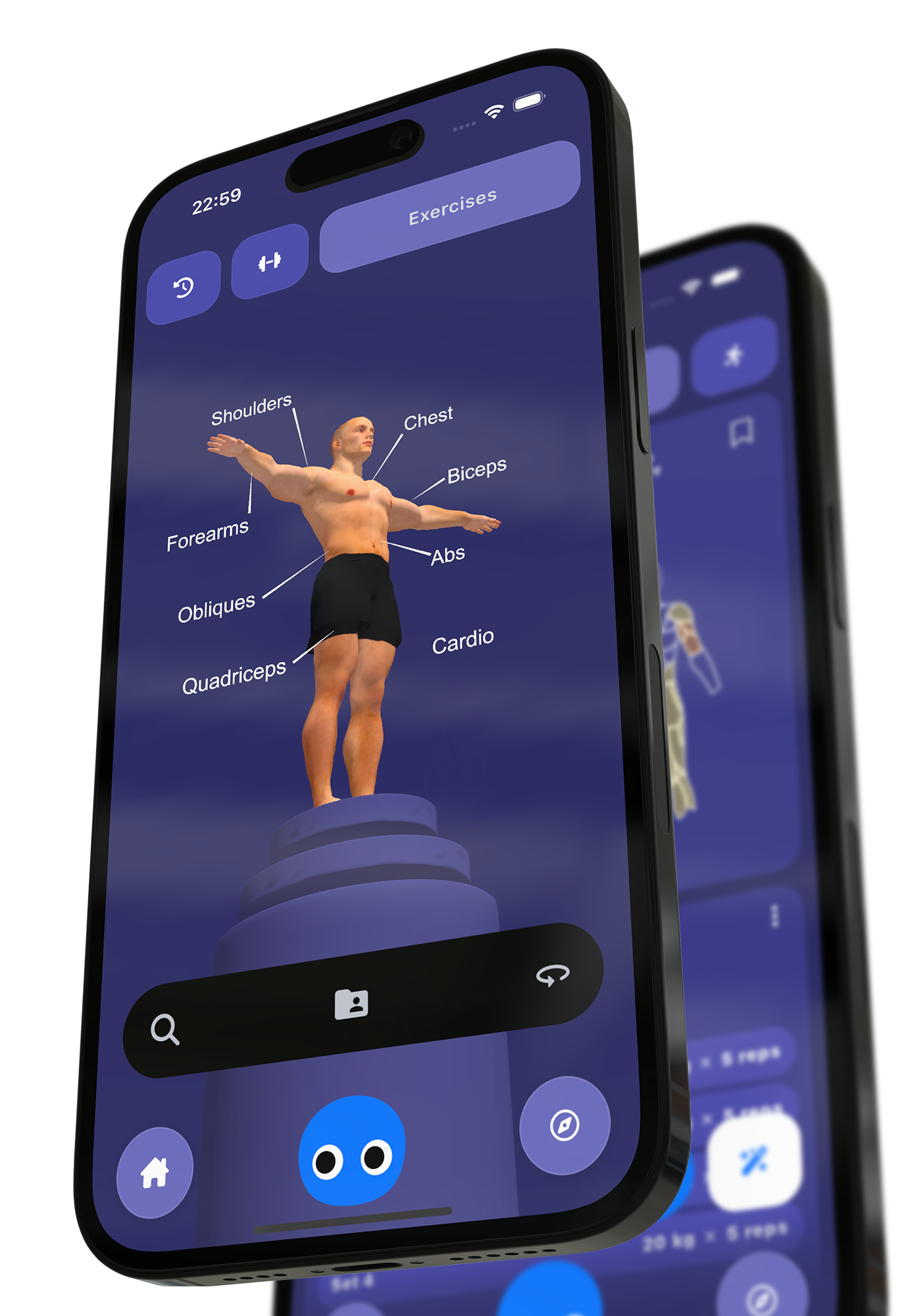
Get detailed 3D demonstrations, track your progress, and receive personalized workout plans featuring this exercise.