Elliptical
Also called elliptical trainer, cross trainer
Quick answer
The elliptical is a cardio machine where you stand on two pedals that travel in an oval path while pushing and pulling moving handles. It gives a low-impact workout for your heart and lungs and works the quads, glutes, hamstrings and calves, with your arms helping.
Written by the GymStreak coaching team · Updated
Muscles worked
Primary
- Heart and lungs
How to do Elliptical
- 1
Step onto the elliptical trainer and select your preferred option from the menu.
- 2
Grab the swinging handles with both hands and begin to pedal at a steady pace.
- 3
When straightening the knee on a downstroke, do not fully lock out the knee.
- 4
If the machine feels too light, turn up the resistance.
- 5
Continue for as long as is required.
Form cues
- Stand tall with your chest up; don't lean on the handles or console.
- Keep your whole foot on the pedal and press through your heels.
- Keep a soft bend in your knees at the bottom of each stride.
- Push and pull the handles to share the work with your upper body.
- When it feels too easy, add resistance rather than only pedaling faster.
Breathing: Breathe in a steady rhythm and let it deepen as the effort rises; at an easy pace you should still be able to speak in short sentences.
Common Elliptical mistakes
Leaning heavily on the handles or console
Hold the handles lightly and support your own bodyweight so your legs do the work.
Pedaling fast with almost no resistance
Raise the resistance until each stride takes some effort and the pedals don't spin freely.
Rising onto the toes
Keep your heels in contact with the pedals and press through the middle and back of your foot.
Slouching over the machine
Stand upright with your shoulders relaxed and your eyes forward.
Sets and reps by goal
| Goal | Sets | Reps | Rest |
|---|---|---|---|
| Beginners | 1 | 10–20 min easy pace | – |
| Endurance | 1 | 20–45 min steady | – |
| Intervals | 6–10 | 30–60 s hard | 60–120 s easy |
Starting ranges in line with the ACSM guidance on resistance training. Pick a load you can lift with good form for every rep, and add weight or reps gradually.
Elliptical variations and alternatives
Variations
- Reverse pedaling
Pedaling backward changes the movement pattern and adds variety to longer sessions.
- Hands-free elliptical
Letting go of the handles makes your legs and core do all the work; only do it if you feel steady.
- Higher incline
On machines with an adjustable ramp, a higher setting makes the stride feel more like climbing.
Alternatives
- Stationary bike
Seated, low-impact cardio that's easy to pace.
- Rowing machine
Full-body cardio with more upper-back and arm work.
- Treadmill
Walking or running if you want weight-bearing cardio.
- StairMaster
Harder, climbing-style cardio that works the glutes and quads.
Elliptical FAQ
What muscles does the elliptical work?
The elliptical mainly works your leg muscles: the quads and glutes push the pedals, with the hamstrings and calves helping through each stride. Pushing and pulling the moving handles brings in your chest, back, shoulders and arms to a lesser degree. Above all it's a cardio exercise, so the main training effect is on your heart and lungs.
Is the elliptical good for beginners?
Yes. Your feet never leave the pedals, so there's no impact, and you can start at a low resistance and an easy pace. Begin with 10–20 min at an effort where you can still hold a conversation, then gradually add time before you add resistance or intervals.
Elliptical vs treadmill: which is better?
Both are good cardio. The elliptical is low impact, which suits people who want less pounding on their joints or are building up their fitness. The treadmill lets you walk or run, which is weight-bearing and closer to everyday movement and running sports. Choose the one you enjoy and will do consistently, or alternate between them.
How long should I use the elliptical?
General guidelines for adults suggest about 150 min of moderate cardio per week, such as 30 min on five days, or about 75 min of vigorous work. On the elliptical that could mean steady sessions of 20–45 min, with a couple of interval sessions added once your fitness improves.
Sources
Related calculators
Read more
- Using ChatGPT as a Workout Planner Is a Terrible Idea — Here’s WhyEveryone is using ChatGPT for ... well, almost everything. Which begs the question: Is there any value in using ChatGPT as a workout planner?7 min read
- How To Get In A Quiet, Effective Workout At HomeWorried about pissing your neighbors off every time you get your sweat on? Here's how you can get an effective yet quiet workout right from home.5 min read
- How To Prevent Excessive Fatigue After TrainingFatigue after training: too much is not good, but neither is too little. So, how do you straddle the thin line and achieve optimal muscle growth?6 min read
Perfect Your Elliptical Form
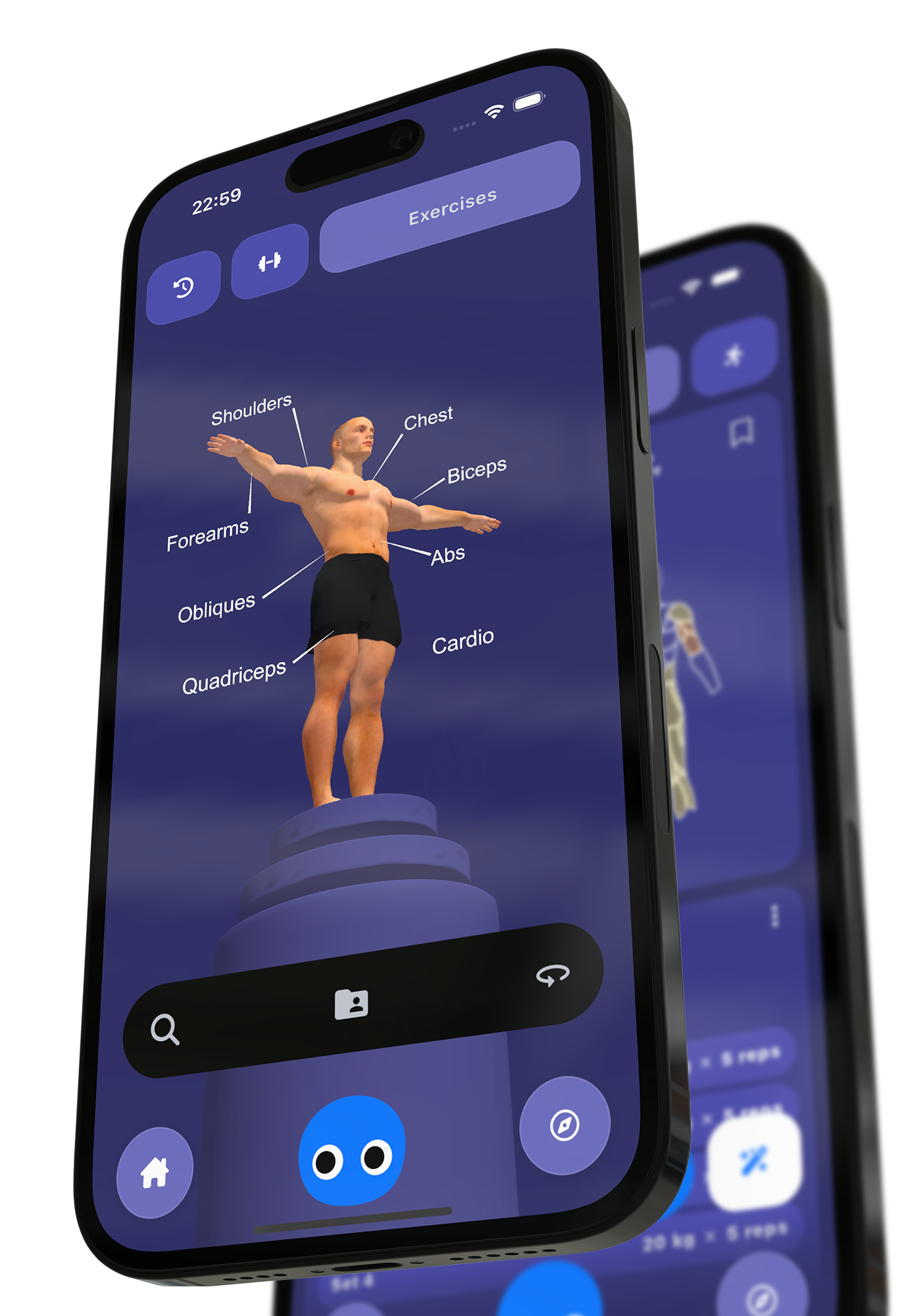
Get detailed 3D demonstrations, track your progress, and receive personalized workout plans featuring this exercise.