Cocoons
Also called cocoon crunch
Quick answer
Cocoons are a floor ab exercise where you lie flat with your arms overhead and legs extended, then crunch your shoulders up while tucking your knees to your chest so your arms and knees meet. They work the abs, with the quads helping to tuck the legs.
Written by the GymStreak coaching team · Updated
Muscles worked
How to do Cocoons
- 1
Begin by lying down on the floor flat with your arms extended straight behind your head. This is your starting position.
- 2
Tuck your knees in towards your chest, lifting your pelvis and raising your glutes off the floor. Bring your arms in towards your knees simultaneously, performing a crunch action by lifting your shoulders off the ground.
- 3
Pause the contraction for a moment at the top then slowly return to the starting position.
Form cues
- Press your lower back gently into the floor before each rep.
- Lift your shoulders as your knees come in, meeting in the middle.
- Curl your hips slightly off the floor at the top of the tuck.
- Keep your heels hovering off the floor for the whole set.
- Reach out long only as far as your lower back stays down.
Breathing: Breathe out as you tuck into the cocoon, and breathe in as you stretch your arms and legs back out long.
Common Cocoons mistakes
Lower back arching as the legs extend
Keep your legs higher on the way out, or bend the knees a little, until your lower back stays down.
Throwing the arms forward for momentum
Lift your shoulders with your abs and let your arms travel with your torso.
Letting the heels drop to the floor
Hover your heels a few inches up; tap down lightly between reps only while you build up.
Tugging the chin into the chest
Keep about a fist-sized gap between your chin and chest as you crunch.
Sets and reps by goal
| Goal | Sets | Reps | Rest |
|---|---|---|---|
| Beginners | 1–3 | 10–15 | 60–90 s |
| Muscular endurance | 2–3 | 12–20 | 30–60 s |
Starting ranges in line with the ACSM guidance on resistance training. Pick a load you can lift with good form for every rep, and add weight or reps gradually.
Cocoons variations and alternatives
Variations
- Bent-knee cocoons
Keep your knees bent as you extend to shorten the lever and protect your lower back while you learn.
- Tuck Crunch
A smaller crunch with the knees kept tucked, a good stepping stone.
- Jackknife Sit-Up
Keeps the legs straight as you fold up, a harder version of the same idea.
Alternatives
- Reverse Crunch
Focuses on curling the hips up, with less work for the upper body.
- Dead Bug
Trains the abs to keep your lower back down while your arms and legs move.
- Leg Raises
Works the abs and hip flexors by lifting straight legs from the floor.
- Crunches
The basic upper-body crunch if cocoons are too hard for now.
Cocoons FAQ
What muscles do cocoons work?
Cocoons mainly work the abs, especially the rectus abdominis, because you curl your upper body and your pelvis toward each other at the same time. The quads and hip flexors help pull the knees in, and the obliques assist in keeping your trunk steady. Holding your legs off the floor between reps adds extra work for the abs.
Are cocoons good for beginners?
They are a step up from basic crunches, because holding your legs and arms out long challenges your abs to keep your lower back down. If your back arches as you extend, keep your knees bent, extend less, or let your heels tap the floor between reps. Crunches, reverse crunches and dead bugs are good options to build up first.
What is the difference between cocoons and crunches?
A crunch only lifts the upper body while your feet stay on the floor. A cocoon moves both ends at once: you lift your shoulders and tuck your knees, then extend your arms and legs out long between reps. That makes cocoons harder and works the lower part of the abdominal wall more through the hip curl.
Why do I feel cocoons in my lower back or hip flexors?
Usually because the legs are extending lower than your abs can control, so your lower back arches and your hip flexors take over. Extend your legs higher, keep a slight knee bend, and focus on curling your hips off the floor during the tuck. If you feel pain in your back rather than effort, stop and get it checked.
Sources
Related calculators
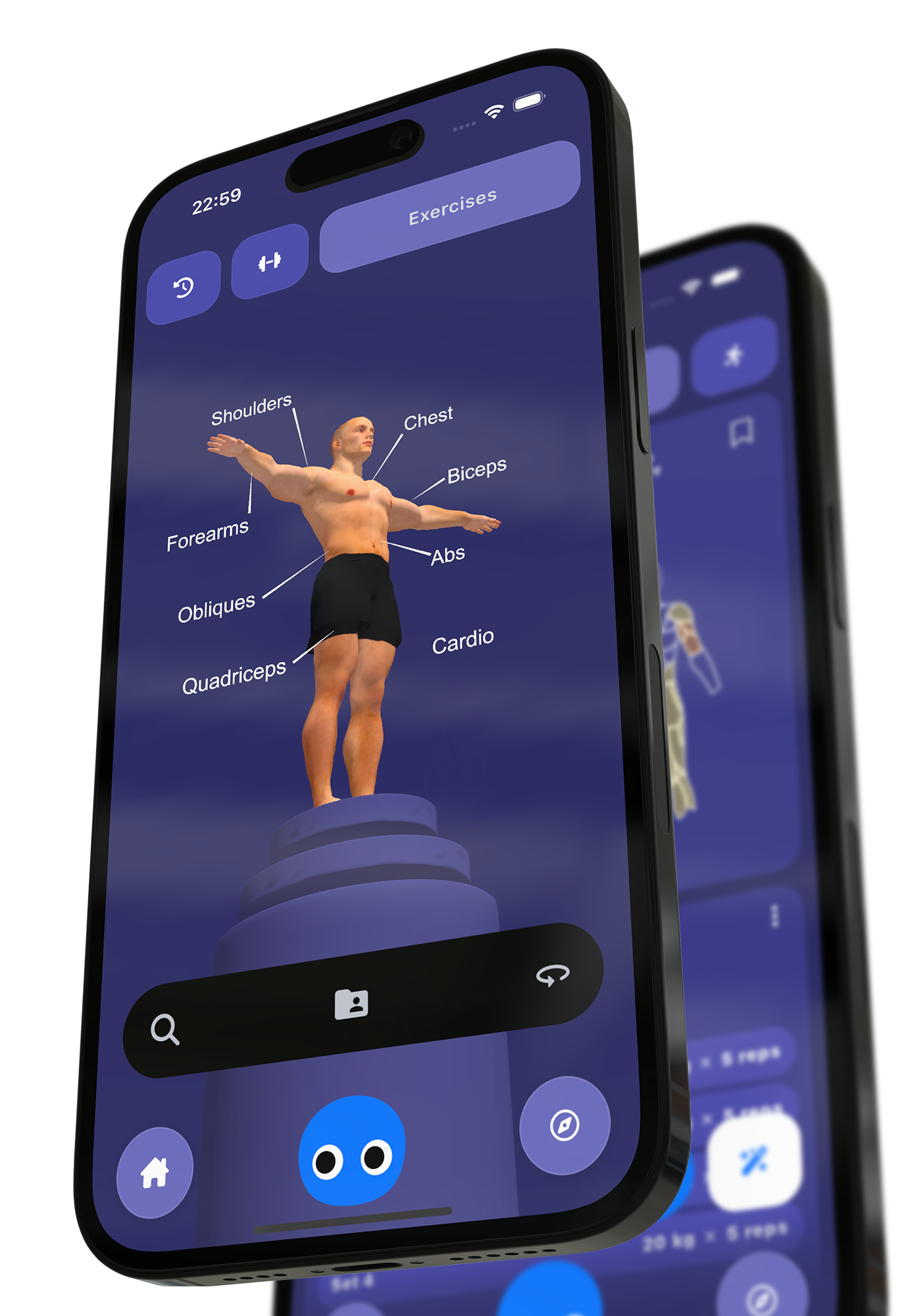
Perfect Your Cocoons Form
Get detailed 3D demonstrations, track your progress, and receive personalized workout plans featuring this exercise.