Barbell Squats
Also called back squat
Quick answer
Barbell back squats are a compound lower-body lift where you carry a barbell across your upper back, sit down until your thighs reach about parallel or lower, and stand back up. They mainly work the quadriceps and glutes.
Written by the GymStreak coaching team · Updated
Muscles worked
How to do Barbell Squats
- 1
Standing in a squat rack, position the barbell on the stand at just below shoulder height. Step under the bar placing in on your traps and grip it with your hands on either side.
- 2
Lift the barbell off the rack and take a step away, ready to perform the movement. This will be your starting position.
- 3
While looking forwards and keeping your back straight, squat down as far as you can.
- 4
Pause for a second, then press down with your heels to return the starting position.
Form cues
- Rest the bar on your upper traps, not your neck, with an even grip.
- Take a big breath and brace your midsection before each rep.
- Sit down between your heels, pushing your knees out over your toes.
- Keep your whole foot planted with your weight over mid-foot.
- Drive up so your chest and hips rise together.
Breathing: Take a deep breath and brace at the top, hold that brace down through the bottom, and breathe out once you're past the hardest part of the way up.
Common Barbell Squats mistakes
Knees caving in out of the bottom
Push your knees out in line with your toes as you drive up, and reduce the load if they keep collapsing.
Hips shooting up before the chest
Lead with your upper back as you drive up so hips and shoulders rise at the same rate.
Heels lifting or weight on the toes
Keep pressure through the whole foot; a slightly wider stance or small plates under the heels can help.
Cutting depth as the weight gets heavy
Use a load you can take to the same depth every rep, at least thighs parallel if your mobility allows.
Relaxing the brace at the bottom
Refill your breath at the top of every rep and stay tight until you're standing again.
Sets and reps by goal
| Goal | Sets | Reps | Rest |
|---|---|---|---|
| Strength | 3–5 | 3–6 | 2–3 min |
| Muscle growth | 3–4 | 6–12 | 1–2 min |
| Muscular endurance | 2–3 | 12–20 | 30–60 s |
Starting ranges in line with the ACSM guidance on resistance training. Pick a load you can lift with good form for every rep, and add weight or reps gradually.
Barbell Squats variations and alternatives
Variations
- Goblet Squat
A great way to learn the squat before loading a bar.
- Front Squat
The bar sits across the front of the shoulders, keeping you more upright with more emphasis on the quads.
- Smith Machine Squat
A guided bar path that's easier to set up and train alone.
Alternatives
- Leg Press
Loads the quads and glutes heavily without the bar on your back.
- Hack Squat
A machine squat with back support that emphasizes the quads.
- Bulgarian Split Squat
A single-leg option that trains each leg hard with much less weight.
Barbell Squats FAQ
What muscles do barbell squats work?
The quadriceps straighten your knees and the glutes extend your hips, and together they do most of the work. The adductors help, especially in deeper squats, while the hamstrings, calves, lower back and abs work to keep you stable and upright under the bar.
How deep should I squat?
Aim for your hip crease to reach at least knee height, around thighs parallel to the floor, if you can do it with your heels down and your back neutral. Going deeper is fine and trains the legs through a longer range. If you can't reach depth, try a slightly wider stance, toes turned out more, or small plates under your heels.
Is it OK for my knees to go past my toes when I squat?
Yes. Knees moving forward past the toes is a normal part of squatting, especially if you have long thighs or squat upright. What matters is that your knees track in line with your toes and your heels stay down. Forcing your knees to stay behind your toes usually makes you lean too far forward.
Do I need a spotter or safety bars to squat?
Squat inside a rack with the safety bars set just below your bottom position whenever you go heavy or train alone. If you miss a rep, you can sit down and lower the bar onto the safeties. A trained spotter is another option, but properly set safety bars are the simplest safeguard.
Is the barbell back squat good for beginners?
Yes, with light weights and a focus on technique. Many beginners first learn the pattern with bodyweight or goblet squats, then move to an empty bar. Add weight gradually, only while every rep reaches the same depth with the same form.
Sources
Related calculators
Read more
- The Ultimate Guide: The Barbell Back SquatWhile most people squat, many don’t perform it correctly – or optimally for maximal leg muscle growth. Perhaps it’s the setup. Or, maybe they’re just not reaching sufficient depth.5 min read
- Surprise, Surprise: Most “Worst Gym Exercises” Are Perfectly Safe and Growth-StimulatingLeg extensions. Smith machine squats. And deadlifts. Are these truly the "worst gym exercises" you could do? Well, that depends. Learn more here.6 min read
- How To Overcome Self-Limiting Beliefs (Become the Best, Fittest Version of Yourself)Self-limiting beliefs keep you from progressing—leaving you stuck, uninspired, and unfulfilled for years on end. Learn how to break free here.5 min read
Perfect Your Barbell Squats Form
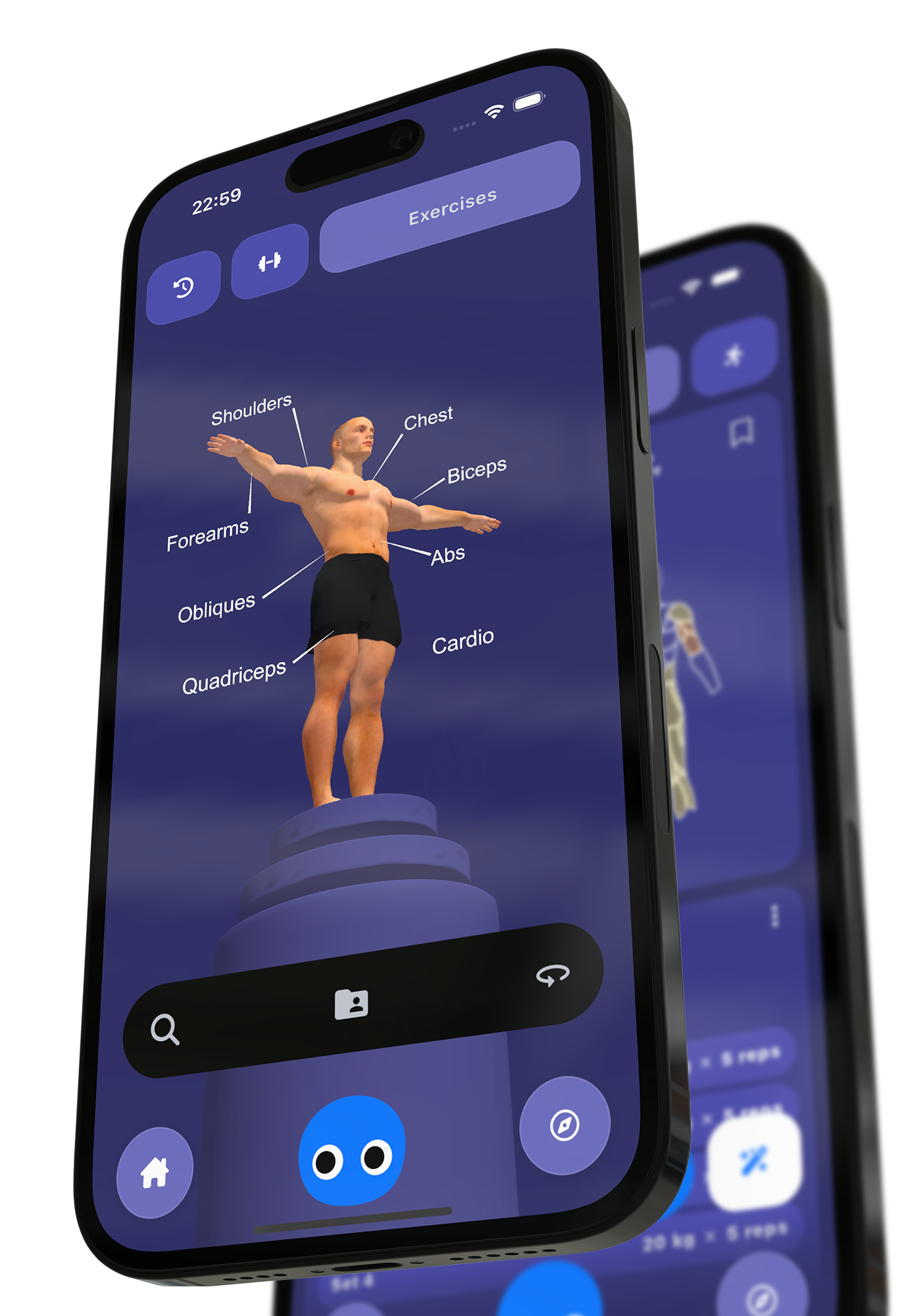
Get detailed 3D demonstrations, track your progress, and receive personalized workout plans featuring this exercise.